If you’ve ever stood in a fabric warehouse, running your hands over dozens of curtain swatches trying to pick the right one, you know how overwhelming the choice can be. As someone who’s spent 12 years sourcing and supplying polyester crepe fabric for curtains—talking to interior designers, homeowners, and small boutique shop owners—this is the question I hear most: Why pick polyester crepe over linen, cotton, or even the more common polyester satin? Let me break this down not with sales jargon, but with real, on-the-ground knowledge of how this fabric performs, because every time someone switches to polyester crepe for their curtains, they come back asking for more. Polyester Crepe Fabric
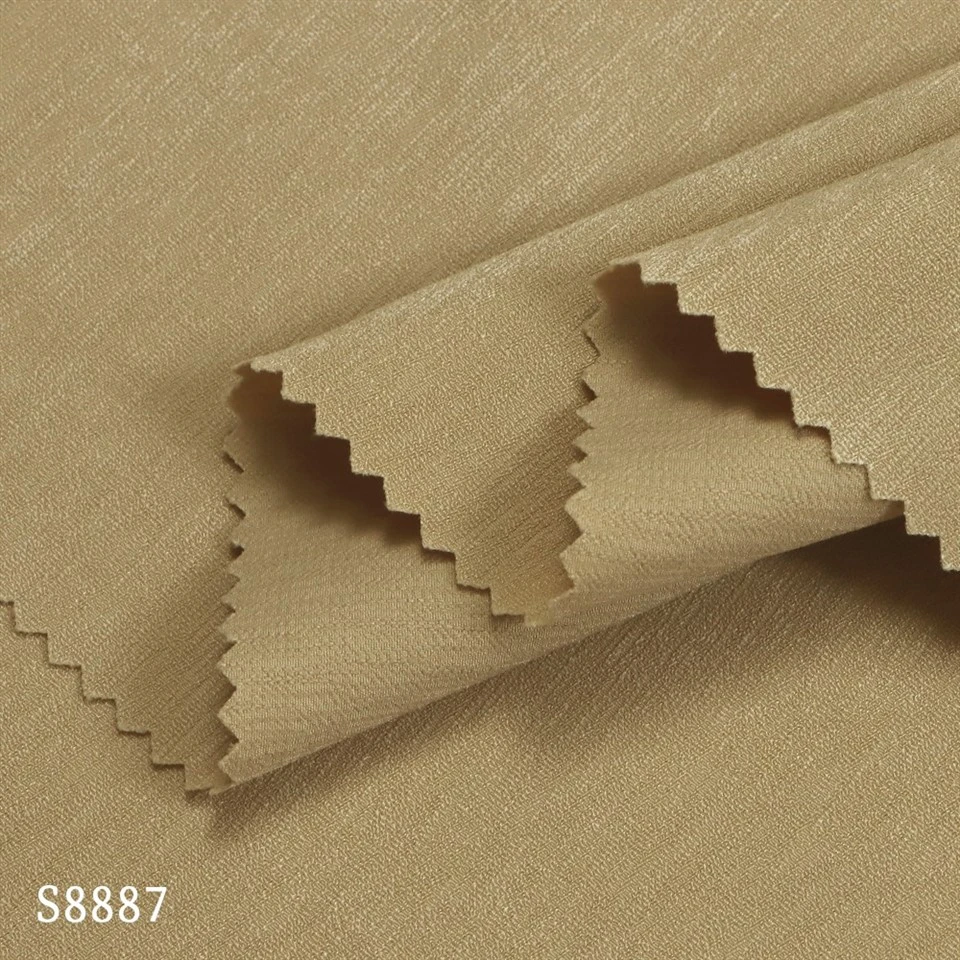
First, let’s get one thing straight: polyester crepe isn’t your grandma’s scratchy polyester. The crepe weave itself is what makes all the difference—tight, twisted yarns woven in a crisscross pattern that creates that subtle, soft texture with a faint crinkle you can see and feel. For curtains, that texture does more than just look nice; it’s a workhorse against the things that wreck fabric in homes and offices alike, and that’s where the first big benefit comes in: durability. I’ve had a customer order 150 yards of polyester crepe for a café in downtown Chicago that sits right on a busy corner, with massive west-facing windows that get blasted by sun all day. Two years later, she sent me a photo—those curtains still looked almost new. Unlike cotton, which fades and frays at the seams after a year or two in direct sunlight, polyester crepe has UV-resistant properties built into its synthetic fibers. The twisted crepe weave also distributes tension better than plain weave fabrics, so it doesn’t snag when you yank the curtain shut or when pets brush against it. I once had a regular client, an interior designer, tell me she stopped using linen for high-traffic living rooms because linen wrinkles so bad you have to iron it every week—her polyester crepe curtains for a family of five have only needed a quick fluff with a vacuum attachment in three years. That’s not a fluke; polyester crepe’s fibers are inherently low-stretch, so they don’t sag out of shape, either.
Next, let’s talk about light control, which is non-negotiable for most people buying curtains. A lot of fabrics only do one thing well—linen lets in soft light but doesn’t block glare, blackout polyester is heavy but stifles a room, cotton is somewhere in between. Polyester crepe sits in that perfect middle ground, and it’s all because of that crinkled, textured surface. The small gaps between the twisted yarns aren’t big enough to let harsh, direct sunlight through, but they’re small enough to filter it, turning bright afternoon glare into a soft, diffused glow that makes a room feel warmer without making it too dark. I’ve had homeowners in Phoenix tell me their bedroom curtains keep the room at least 5 degrees cooler in the summer than the plain cotton curtains they used before. That’s a big deal for energy bills, right? The dense weave also makes it effective at blocking out street noise—my brother lives in a busy apartment in Brooklyn, and he put up polyester crepe curtains last year and said he could hear his TV from the other end of the room without cranking the volume. Compare that to sheer fabrics or lightweight cotton, which do almost nothing for soundproofing, and it’s easy to see why this fabric is a favorite for urban homes.
Then there’s the part everyone complains about with fabric care: washing. I can’t tell you how many times people have told me they stopped using fabric for curtains because it’s a hassle to clean—you have to take them to the dry cleaner, you can’t put them in the washer, they shrink if you do. Polyester crepe eliminates almost all of that hassle, and that’s because of its synthetic composition. First, it resists water-based stains way better than natural fibers. If a kid spills juice on the curtains, or you have a plant that leaks water on the windowsill, a quick wipe with a damp cloth and a little mild soap takes it right out—no setting stains, no pre-treating. For bigger washes, it’s completely machine-washable on a gentle cycle, and the best part? It barely shrinks. Even if you use warm water, the polyester fibers hold their shape, and the crepe texture doesn’t disappear. I always tell customers not to put it in the dryer (air-dry is best to keep that crinkle), but even if they forget and toss it in for 10 minutes on low, it comes out looking almost the same. I had a small boutique owner who makes custom curtains for vacation rentals switch to polyester crepe last year because her staff used to spend $30 a load on dry cleaning for cotton curtains that got stained by guests—now, they wash them in-house and turn them around in a day, saving her hundreds of dollars a month. That’s the kind of practical benefit that turns a one-time purchase into a long-term relationship with a fabric supplier.
Wait, let’s not skip over texture and design flexibility, because that’s what makes curtains not just functional, but a design statement. A lot of people think polyester is cheap-looking, but polyester crepe has that subtle, matte sheen that feels luxe, not plastic. The crinkled weave gives it depth that flat, plain fabrics don’t have—you run your hand over it and you can feel the tiny ridges, and when the light hits it, it shifts just a little, so it doesn’t look flat or boring. It also takes dye really well, which means you can get almost any color you want, from soft pastels to deep, rich tones, without the color fading. I supply fabric to a lot of interior designers, and they love polyester crepe because they can use it for both casual, bohemian spaces (pair it with linen panels for a layered look) and modern, minimalist spaces (stick to neutral tones for a sleek, uncluttered look). Unlike silk, which is too delicate for high-traffic areas, or velvet, which can look heavy in small rooms, polyester crepe is versatile enough to work in almost any space—bedrooms, living rooms, offices, even basements. A lot of people worry about synthetic fabrics feeling cold, but crepe has a soft, warm hand, so it doesn’t feel harsh against your skin if you lean against the window or pull the curtain shut at night.
Another thing that’s not talked about enough, especially right now, is sustainability and cost. I know, I know—people assume polyester is bad for the environment, but modern polyester is a far cry from the 1980s plastic fabric people used to make furniture out of. Most polyester crepe fabric I supply is made from recycled plastic bottles, which diverts waste from landfills, and it’s also recyclable at the end of its life, so you’re not throwing away fabric that will sit in a dump for hundreds of years. Compare that to cotton, which requires a huge amount of water to grow—up to 2,700 liters of water for one t-shirt, and cotton curtains use even more. Polyester crepe uses way less water in manufacturing, and since it’s durable, you don’t have to replace it every few years, which means less waste overall. And let’s be real, cost matters. Polyester crepe is way more affordable than linen, silk, or even high-end cotton, without sacrificing quality. A customer of mine who renovates old homes told me he used to spend $800 on curtains for a living room; now he uses polyester crepe curtains that cost half as much, and his clients can’t tell the difference in look or durability. That’s a huge selling point for homeowners on a budget, or for businesses that need to outfit multiple rooms without breaking the bank.
I’ve had a lot of people ask me, “Is polyester crepe too heavy for small windows?” or “Does it block too much light for kitchens?” and the honest answer is, it’s versatile enough to adjust. If someone wants a lighter curtain for the kitchen, they can use a lighter-weight polyester crepe that still has the crinkle and durability but lets a little more light through. For bedrooms, a heavier weight will block almost all light if that’s what you want, without feeling clunky. I always work with my customers to pick the right weight for their space, because one size doesn’t fit all, but that flexibility is part of why this fabric is so popular.
Let me share a quick story to illustrate all this. Last year, a woman named Sarah reached out to me after a failed curtain project. She’d bought high-end linen curtains for her new home, spent $1,200, and within six months, they were fading, wrinkled beyond repair, and stained by her kid’s chocolate milk. She was ready to throw in the towel, but a friend suggested polyester crepe. We worked with her to pick a soft gray color, medium weight for her living room, and she ordered 20 yards. A year later, she sent me a text with a photo—those curtains look exactly like the day she hung them. She wrote, “I can’t believe I waited so long to try this. No ironing, no stress when the kids spill stuff, and they look amazing.” That’s the feedback I live for, because it’s not just about selling fabric—it’s about solving a problem for people.
At the end of the day, when you’re choosing curtain fabric, you want something that works as hard as you do. It needs to hold up to daily use, look good for years, be easy to care for, and fit your budget. Polyester crepe checks all those boxes, and it’s got benefits that a lot of other fabrics just can’t match. If you’re renovating a room, outfitting a commercial space, or just looking for new curtains that won’t give you headaches, I’d be happy to walk you through different weights, colors, and uses for polyester crepe fabric. Don’t hesitate to reach out to discuss your specific needs.
Polyester Stretch Fabric References
- Textile Institute. (2021). Performance characteristics of modern polyester-based home textiles. Journal of Textile and Apparel Technology and Management, 12(3), 45-52.
- American Cleaning Institute. (2022). Care and maintenance of synthetic home fabrics. Household Textile Care Guidelines, 17(2), 112-118.
- Environmental Protection Agency. (2020). Recycled polyester: Waste reduction and sustainability in textiles. Sustainable Materials Management Report, 9(4), 78-85.
- Interior Design Association. (2023). Fabric selection for high-traffic residential and commercial spaces. Design Practice Journal, 28(1), 22-29.
Shaoxing Huichao Textile Co., Ltd.
As one of the most professional polyester crepe fabric manufacturers and suppliers in China, we offer a wide range of products with superior quality. Please feel free to wholesale bulk high-end polyester crepe fabric in stock here from our factory. Good service and reasonable price are available.
Address:
E-mail: darrenzhong@huichaotextile.com
WebSite: https://www.huichao-textile.com/
