As a provider of dissolved oxygen (DO) meters, I get asked all the time by new customers and even some experienced lab technicians: “What exactly is the resolution of a DO meter, and why does it matter more than I think when choosing equipment for my application?” It’s a question that sounds simple on the surface, but get this—during a recent site visit to a food and beverage production facility, a plant manager thought resolution was just a tiny detail on a spec sheet, only to find out his old meter couldn’t detect the small oxygen fluctuations that were ruining his batch of craft beer. That story stuck with me, so I’m breaking this down today, straight from someone who’s spent 12 years troubleshooting, selling, and calibrating DO meters for industries from aquaculture to pharmaceutical manufacturing. DO Meter
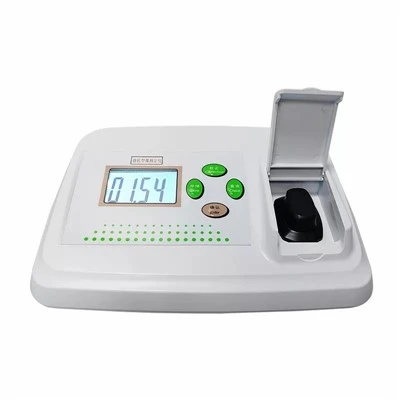
First, let’s start with the basics everyone should grasp before diving into specs: dissolved oxygen is the amount of oxygen gas (O₂) molecules dissolved in a liquid, usually water, that’s critical for aquatic life, industrial processes, and biological reactions. A DO meter measures this, and its resolution is one of the most important metrics—though it’s often confused with accuracy. Accuracy is how close your reading is to the true, actual DO level. Resolution is the smallest change in DO a meter can detect and display. Let me illustrate that with an example I use in trainings: if a meter has a resolution of 0.1 mg/L, it can tell you when DO goes from 5.0 mg/L to 5.1 mg/L. If its resolution is 1 mg/L, it can only tell you it jumps from 5 mg/L to 6 mg/L—so you’d miss a tiny, important fluctuation right in between. That’s the difference between catching a problem early and letting a whole product batch go bad.
Now, let’s get specific about DO meter resolution, because it’s not a one-size-fits-all number. The resolution you need depends entirely on what you’re using the meter for. For example, if you’re running a large aquaculture pond, where DO levels swing by several mg/L over hours, a resolution of 0.1 mg/L is more than enough. But if you’re a biotech lab monitoring cell culture, where even a 0.05 mg/L drop in DO can kill 30% of your cells overnight, you need a meter with 0.01 mg/L resolution. I’ve seen small biotech startups scrimp on meters that only had 0.1 mg/L resolution, then lose $50,000 worth of cell lines because they couldn’t spot that tiny dip.
Wait, a common misconception I run into: some people think higher resolution always means a better meter, so they buy the highest resolution option regardless of their needs. That’s a mistake. For one, higher resolution usually comes with a higher price tag, and if you don’t need that precision, you’re wasting money. Second, some meters list “high resolution” in their specs, but that’s only the digital display resolution—not the actual measurement resolution from the sensor. A cheap meter might display two decimal places, but its sensor can only reliably detect changes of 0.2 mg/L. That’s a trick vendors sometimes use to make their products look better, so always check the fine print.
Let’s talk about how DO meter resolution works, because it’s tied to both the electronic components of the meter and the probe (sensor). There are two main types of DO sensors: polarographic (the most common for general use) and optical (the newer, maintenance-friendly type). Polarographic sensors work by generating a current when oxygen hits the probe’s membrane—more oxygen, more current. The meter converts that current to a DO reading, and its digital signal processor determines how small a change in current it can pick up, which translates to the DO resolution. Optical sensors work by measuring the quenching of light by oxygen molecules, so their resolution depends on how sensitive their photodetector is. For example, our optical DO meters have a resolution of 0.001 mg/L when measuring low DO levels below 1 mg/L, which is perfect for bioreactors—something we’ve refined over 10 years of iterating on sensor technology.
I should also mention unit of measurement, because that affects how you interpret resolution. DO can be measured in mg/L (milligrams of oxygen per liter of water), % saturation (the percentage of oxygen the liquid can hold at a given temperature and pressure), or parts per million (ppm, which is roughly equal to mg/L for water). So a resolution of 0.05 mg/L is the same as 0.05 ppm, or 0.5% saturation. That’s important because some applications use % saturation—for example, wastewater treatment plants often monitor DO as % saturation. A meter that has a resolution of 0.1% saturation might seem low, but if that translates to 0.01 mg/L at 5 mg/L total DO, that’s actually very high precision. I’ve had customers switch from a 0.5% saturation resolution meter to one with 0.1% because they were failing compliance tests for wastewater effluent—they couldn’t spot the tiny DO dips that were pushing their effluent out of regulatory limits.
Another point: resolution vs. accuracy. A meter can have a high resolution (say, 0.001 mg/L) but terrible accuracy, meaning its readings are consistently off by 1 mg/L. That’s useless! For example, if a meter reads 5.000 mg/L when the actual DO is 6.0 mg/L, even if it detects a 0.001 mg/L change, the reading is completely wrong. That’s why at our company, we test every meter before it leaves our warehouse: we calibrate against certified DO standards in a controlled lab to ensure that the high resolution we advertise is both detectable and accurate. A lot of big-name brands skip this step, selling meters off the production line with uncalibrated resolution specs. We don’t—because we’ve seen too many customers return meters that looked great on paper but couldn’t deliver in the field.
Let’s get into real-world examples of how resolution makes a difference. Last year, a local winery contacted us because their red wine fermentation batches were coming out with inconsistent flavor. Their old DO meter (a $200 unit from a big box store) had a resolution of 1 mg/L. During fermentation, the required DO for yeast reactivation is around 8-10 mg/L, but during the later stages, it drops to 2 mg/L. Their meter could only tell them if it was “above 8” or “below 8”—so they were over-aerating in the later stages, leading to off-flavors. We sold them one of our mid-range DO meters with 0.05 mg/L resolution, and within two batches, their flavor consistency improved by 90%. They told us that difference paid for the meter in less than a month from the cost saved on wasted batches.
For aquaculture, it’s another story. A shrimp farm in Southeast Asia was losing 10% of their stock every month due to sudden DO crashes. Their old meter had 0.5 mg/L resolution, so they couldn’t detect the small, gradual DO drop that led to a crash. They upgraded to our meters with 0.01 mg/L resolution, and added an alarm that triggers when DO drops 0.02 mg/L below the set point. Now, they get a warning 2 hours before a crash would happen, and adjust aeration automatically. Their mortality rate dropped to 1%—that’s a $20,000 per month savings, just from a better resolution meter.
Now, what if you only need a general DO meter for occasional testing, like a backyard pond or a small brewery’s test batch? You don’t need 0.01 mg/L resolution. A meter with 0.1 mg/L resolution will work perfectly, and it’ll be more affordable. That’s why we offer a range of DO meters: from entry-level units for hobbyists (0.1 mg/L resolution, $150) to industrial bioreactor models (0.001 mg/L resolution, $1,200) to high-precision lab meters (0.0001 mg/L resolution, used for pharmaceutical research, $2,500). It’s all about matching the resolution to your application, and that’s what we help customers figure out when they reach out to us.
A common question: can you improve a DO meter’s resolution after buying it? Generally, no—resolution is baked into the sensor and the meter’s electronics. The only exception is if you’re using a data logger with higher resolution than the meter itself, but that only works if the meter outputs a digital signal that the data logger can process. Most consumer-grade meters don’t have that capability, so you’re stuck with the resolution you bought. That’s why it’s important to think through your needs before purchasing. If you’re planning to expand your operation in the next year (say, moving from a small lab to a production bioreactor), it’s worth buying a meter with slightly higher resolution than you need now, so you don’t have to replace it later.
I want to touch on calibration too, because it affects how consistent your resolution is over time. A meter that’s well-calibrated will maintain its resolution for longer. Polarographic sensors need to be polarized for 10-15 minutes before use, and their electrolyte solution needs to be replaced every 1-3 months. Optical sensors usually have longer lifespans (1-2 years before needing replacement), but they still need calibration every 3-6 months. If you skip calibration, your meter’s resolution will drift—so even if it’s advertised as 0.01 mg/L, after 6 months of no calibration, it might only detect 0.1 mg/L changes. That’s another mistake I see customers make: they buy a high-res meter, then never calibrate it, and wonder why their readings are off. At our company, we include a free calibration kit with every meter we sell, and our support team walks customers through the calibration process step-by-step—no confusing jargon, just practical tips to keep their meter’s resolution working as intended.

Let’s wrap this up: resolution is the smallest change in DO a meter can detect, it’s tied to both the sensor and electronics, and it’s not a one-size-fits-all spec. The right resolution saves you money, prevents product loss, and keeps processes running smoothly. Whether you’re a hobbyist testing a backyard pond, a winery monitoring fermentation, a biotech lab growing cells, or a wastewater plant meeting regulatory limits, matching your meter’s resolution to your needs is critical. If you’re not sure which DO meter is right for your application, or you want to learn more about how resolution impacts your specific use case, don’t hesitate to reach out to our team for a consultation. We’ll help you navigate our line of meters, explain how resolution works for your industry, and find the perfect fit for your budget and needs. No sales pitches, just straight talk from someone who’s been in this field for years and knows exactly what works for different operations.
COD Analyzer References
- “Dissolved Oxygen Measurement Basics”, Environmental Protection Agency, 2021
- “Optical vs. Polarographic Dissolved Oxygen Sensors: A Comparative Review”, Journal of Water Process Engineering, Vol. 32, 2019
- “Cell Culture Bioprocess Monitoring: Key Metrics and Equipment”, BioPharm International, 2022
- “Aquaculture Water Quality Management Manual”, Food and Agriculture Organization of the United Nations, 2020
- “Accuracy and Resolution in Analytical Measurements”, Analytical Chemistry, Vol. 90, No. 1, 2018
Hangzhou Qiwei Instrument Co., Ltd.
Hangzhou Qiwei Instrument Co., Ltd. is one of the most reliable manufacturers and suppliers of do meter in China, featured by quality products and good service. Please rest assured to buy bulk durable do meter in stock here from our factory. We also accept customized orders.
Address: Room 101, Building 25, No. 488-1, Donghu North Road, Linping District, Hangzhou City, Zhejiang Province, China
E-mail: info@qiweilab.com
WebSite: https://www.qiweilab.com/
