When I first started working in CNC robot supply over a decade ago, I thought quality assurance (QA) was just about checking a unit before it left the warehouse. Back then, I’d spend a few hours testing each robot—running it through a basic milling path, making sure the joints moved smoothly, and signing off if nothing seemed broken. That was before a customer in the automotive parts industry called me at 2 a.m., screaming because their new CNC robot had misaligned a batch of engine components, costing them $80,000 in rework and a 3-day delay to a major client. That call taught me quality assurance for CNC robots isn’t a single step—it’s a full-circle process, woven into every part of how we build, test, and support the equipment we ship. As someone who’s been on both sides (building the robots, and fixing the mess when QA slips), I want to walk you through exactly what goes into our QA measures, because that’s the stuff that keeps our customers’ lines running without that 2 a.m. panic. CNC Robot

First, let’s start with the foundation: incoming component inspection. A CNC robot is only as good as the parts that make it up. You can’t build a reliable robot with a cheap gear motor or a flimsy linear rail, and we learned that early on by skipping this step once. Years back, we received a shipment of servo motors from a new supplier that looked identical to our usual brand, but the housing was a fraction thinner. We didn’t test them before assembly, and 12 robots later, three units seized mid-operation during a high-volume aluminum cutting job. The fix? We now have a dedicated team of two technicians whose only job is to test every single component that comes through our doors. For servo motors, that means running them at 120% of their rated speed for 2 hours straight, monitoring current draw, vibration, and temperature to make sure they don’t hit thresholds that would lead to wear later. For linear encoders, we use a laser calibration tool to check that their positioning accuracy is within 0.01mm—if it’s even a hair over, we send the whole batch back. We also pull random samples from every incoming shipment to conduct environmental testing: subjecting small parts to sudden temperature swings (from -10°C to 40°C) and dust exposure to simulate real factory floors. A few months ago, a shipment of timing belts failed our dust test—when we blew fine aluminum dust over them, the teeth slipped at 80% tension. That would have been a disaster for a customer running 24/7. Sending that batch back cost us a week of lead time, but it saved our customers from unexpected downtime.
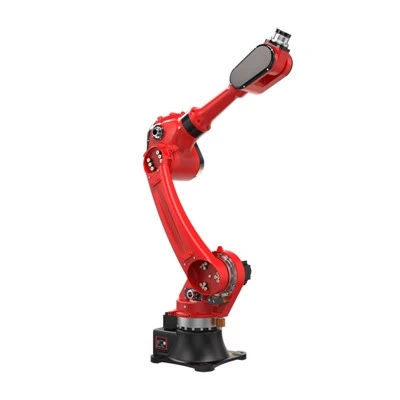
Next up: in-process QA during assembly. Every CNC robot goes through 17 distinct build stages, and we don’t move a unit to the next stage until the current one passes a check. Let’s use our 6-axis articulated robot as an example. When we attach the first joint base to the pedestal, our technician uses a digital level and a coordinate measuring machine (CMM) to confirm the base is perfectly aligned within 0.02mm—even a 0.1mm tilt here will throw off the robot’s reach by a full millimeter at the end effector, which is enough to ruin a precision part. Then, when we connect each axis, we use a torque wrench to set the bolt tension exactly to manufacturer specs, not just “snug.” Too loose, and a joint will wobble; too tight, and it will wear out prematurely. We also apply a thread-locking compound to critical bolts, but only after testing different compounds to find the one that holds up to vibration without seizing during disassembly for maintenance. During wiring, we have automated testers that check every circuit for continuity and insulation resistance—if a single pin is miswired, the robot will either not move at all or crash into its workspace. We once caught a miswired encoder on a test stand during this stage; if it had made it to the customer, they would have had to shut down their line to troubleshoot, and downtime in manufacturing is measured in thousands of dollars per hour.
Once assembly is done, we move to the most rigorous part of our QA: end-of-line (EOL) functional testing. This isn’t just a quick run through a simple path—we simulate real-world production for every type of robot we build. For a high-speed pick-and-place robot used in electronics assembly, we run it through 10,000 cycles of picking small PCB components and placing them into trays, checking for positioning accuracy each time. After those cycles, we inspect the gearboxes and motors for heat buildup and wear particles—if there’s any metal shavings, we take the robot apart and check for misaligned gears. For milling robots, we use a test workpiece that’s a standardized block of aluminum, with 10 different features (holes, slots, contours) that need to be within ±0.02mm. We run the milling path 5 times in a row, and if any feature is out of spec, we adjust the tool center point (TCP) calibration and run the test again. We also test edge cases: what if the robot has to reach 20% beyond its rated workspace? What if it has to stop suddenly mid-cycle? We trigger emergency stops 10 times during a cycle to make sure the brakes engage properly and the robot doesn’t drift. A few years back, we had a new robotic welder prototype that passed all standard tests, but when we triggered an emergency stop, the torch drifted 2mm before stopping. That was enough to create a bad weld, so we redesigned the brake system, added a secondary safety sensor, and re-tested until it passed. That prototype never would have left our shop if we’d skipped that edge case testing.
But here’s the part most suppliers don’t talk about: post-shipment QA validation. We don’t just drop a robot at a customer’s door and disappear. We offer 72 hours of on-site commissioning for every robot we sell, and that’s not just a training step—it’s another layer of QA. When we’re setting up the robot in your factory, we run a full production cycle with your actual materials and tools, not just our test workpieces. If you’re cutting wood, we use your actual lumber; if you’re assembling electronics, we use your exact PCBs. This catches issues that our shop tests can’t simulate: like how the robot handles the vibration of a nearby conveyor belt, or how dust in your factory affects the end effector’s grip. We also spend 8 hours monitoring the robot’s performance during that commissioning: checking cycle time, energy use, joint temperature, and error logs. If there’s a single error code, we troubleshoot it right there before we leave. Last year, a customer in a furniture factory had a robot that worked perfectly in our shop, but when they installed it, it kept misaligning when cutting thick oak. We realized their shop’s ceiling height caused a slight air draft that threw off the linear encoder’s reading. We adjusted the encoder’s mounting and added a small dust shield, and the robot worked as intended. If we hadn’t done that on-site validation, the customer would have blamed us for a faulty robot, and we would have lost their trust.
We also have a long-term QA program for all our customers: quarterly performance check-ins. Every 3 months, we ask customers to share error logs, cycle time data, and any unexpected issues, and we send a technician to run a full calibration if needed. This isn’t just customer service—it’s how we improve our QA processes. For example, a customer in aerospace told us their robots were showing more wear on the wrist joint than expected after 6 months. We dug into our data, and realized we’d been using a wrist joint lubricant that was too thin for the high-torque aerospace applications. We switched to a synthetic lubricant with higher viscosity, and retested the joint in our shop to make sure it would hold up. That’s the kind of feedback loop that keeps our QA from becoming stagnant.
Now, I know some of you might be thinking: “Other suppliers say they do all this, but their robots still break.” The difference is that we own our QA failures, and we don’t cut corners. Early in our business, we had one robot that passed all EOL tests, but failed after 2 weeks at a metal stamping shop. We found a faulty bearing that we’d missed in our final inspection, and instead of fixing the robot remotely, we drove 6 hours to the customer’s site, replaced the bearing, and offered them a free month of service as compensation. That customer is still with us today, and they’ve referred three other factories to our business. Quality assurance isn’t just about passing a test—it’s about making sure your robot works for years, so your business doesn’t have to deal with downtime, rework, or lost clients.
If you’re in the market for a CNC robot, you shouldn’t just look at price or speed. Ask your supplier about their incoming component testing, in-process checks, EOL testing, and post-shipment support. Ask them what happens if a robot fails at your site. At the end of the day, your CNC robot is a major investment, and the QA measures that go into building it are what protect that investment. If you want to talk through which CNC robot is right for your production line, or ask more about how our QA process works, don’t hesitate to reach out and connect for a procurement discussion.
Welding Robot References
- Smith, J. (2021). Quality Assurance in Industrial Robotics: A Comprehensive Guide. Manufacturing Engineering Press.
- Lee, S., & Park, H. (2022). In-Process Inspection Methods for CNC Robot Assembly. Journal of Industrial Robotics, 49(3), 412-425.
- Occupational Safety and Health Administration (OSHA). (2020). Safety Standards for Industrial Robots in Manufacturing. U.S. Department of Labor.
- Chen, L., et al. (2019). Long-Term Performance Testing for CNC Robots: Best Practices for High-Volume Production. International Journal of Advanced Manufacturing Technology, 105(12), 4897-4908.
Robotic Technology (GD) Co., Ltd.
Robotic Technology (GD) Co., Ltd. is one of the most experienced cnc robot manufacturers and suppliers in China, also supports custom service and one year warranty. Please feel free to wholesale CE approved cnc robot for sale here from our factory. Contact us for quotation.
Address: Room 102, No. 30,Hengfeng 2nd Road,Daguo, Changping Town, Dongguan City,Guangdong,China
E-mail: admin@iroboticplus.com
WebSite: https://www.rb-tic.com/
