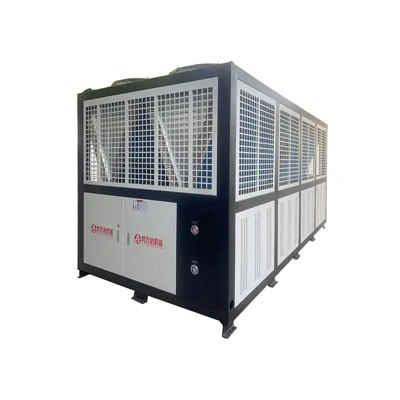
As a supplier of industrial cooling equipment, I understand the critical importance of accurately measuring the cooling capacity of our products. In this blog, I’ll share insights on how to measure the cooling capacity of industrial cooling equipment, which is essential for both our customers and us to ensure that the equipment meets the specific needs of different industrial applications. Industrial Cooling Equipment
Understanding Cooling Capacity
Before delving into the measurement methods, it’s crucial to understand what cooling capacity means. Cooling capacity refers to the amount of heat that an industrial cooling system can remove from a space or a process within a given period. It is typically measured in British Thermal Units per hour (BTU/h) or kilowatts (kW). A higher cooling capacity indicates that the equipment can remove more heat, which is necessary for large – scale industrial operations with high heat loads.
Factors Affecting Cooling Capacity
Several factors can influence the cooling capacity of industrial cooling equipment. These include:
- Ambient Temperature: The temperature of the surrounding environment plays a significant role. Higher ambient temperatures can reduce the efficiency of the cooling equipment, as it has to work harder to remove heat.
- Humidity: High humidity levels can also impact the cooling process. Moisture in the air can make it more difficult for the equipment to transfer heat effectively.
- Load Requirements: The amount of heat generated by the industrial process or the space to be cooled is a major factor. Different industries have different heat loads, such as in manufacturing plants where heavy machinery generates a large amount of heat.
- Equipment Design: The design of the cooling equipment, including the type of compressor, condenser, and evaporator, can affect its cooling capacity. For example, a well – designed evaporator can improve heat transfer and increase the overall cooling efficiency.
Methods of Measuring Cooling Capacity
1. Direct Measurement
- Calorimeter Method: This is one of the most accurate ways to measure cooling capacity. A calorimeter is a device that measures the amount of heat transferred. In an industrial setting, a large – scale calorimeter can be used to measure the heat removed by the cooling equipment. The cooling equipment is connected to the calorimeter, and the heat transfer is measured over a specific period. The formula for calculating cooling capacity using the calorimeter method is (Q = m\times c\times\Delta T), where (Q) is the heat transfer (cooling capacity), (m) is the mass of the substance being cooled, (c) is the specific heat capacity of the substance, and (\Delta T) is the change in temperature.
- Flow and Temperature Measurement: Another direct measurement method involves measuring the flow rate of the coolant and the temperature difference across the cooling system. For example, in a water – cooled system, the flow rate of water can be measured using a flow meter, and the inlet and outlet temperatures of the water can be measured using thermometers. The cooling capacity can then be calculated using the formula (Q = m\times c\times\Delta T), where (m) is the mass flow rate of the coolant (which can be calculated from the volumetric flow rate and the density of the coolant), (c) is the specific heat capacity of the coolant, and (\Delta T) is the temperature difference between the inlet and outlet of the coolant.
2. Indirect Measurement
- Power Consumption Method: The power consumption of the cooling equipment can be used to estimate its cooling capacity. The power input to the compressor, fans, and other components of the cooling system is measured. Based on the efficiency of the equipment, the cooling capacity can be estimated. For example, if the efficiency of a cooling system is known to be a certain percentage, and the power consumption is measured, the cooling capacity can be calculated using the formula (Q=\eta\times P), where (Q) is the cooling capacity, (\eta) is the efficiency of the cooling system, and (P) is the power consumption.
- Performance Testing in a Controlled Environment: Cooling equipment can be tested in a controlled environment, such as a test chamber. The equipment is operated under specific conditions, and the temperature and humidity inside the chamber are monitored. By comparing the initial and final conditions, the cooling capacity can be estimated. This method is useful for evaluating the performance of the equipment under different operating conditions.
Importance of Accurate Measurement
Accurately measuring the cooling capacity of industrial cooling equipment is of utmost importance for several reasons:
- Energy Efficiency: By knowing the exact cooling capacity, customers can select the right – sized equipment. An oversized cooling system will consume more energy than necessary, while an undersized system will not be able to meet the cooling requirements, leading to inefficiencies and potential damage to the industrial process.
- Process Optimization: In industrial processes, maintaining the right temperature is crucial for product quality and production efficiency. Accurate cooling capacity measurement ensures that the cooling equipment can provide the required amount of cooling to optimize the process.
- Cost – Effectiveness: Selecting the right – sized cooling equipment based on accurate cooling capacity measurement can save costs in the long run. It reduces energy consumption, maintenance costs, and the risk of premature equipment failure.
Case Studies
Let’s take a look at a couple of case studies to illustrate the importance of measuring cooling capacity.
Case Study 1: A Manufacturing Plant
A manufacturing plant was experiencing overheating issues in its production area. The existing cooling system was not providing sufficient cooling, and the temperature was affecting the quality of the products. By accurately measuring the cooling capacity of the current system and the heat load of the production area, we were able to recommend a new cooling system with the appropriate cooling capacity. After the installation of the new system, the temperature in the production area was maintained at the optimal level, resulting in improved product quality and increased production efficiency.
Case Study 2: A Data Center
A data center was facing high energy costs due to an oversized cooling system. The cooling capacity of the system was much higher than the actual heat load of the data center. By measuring the cooling capacity and the heat load, we were able to downsize the cooling system. This not only reduced the energy consumption but also lowered the maintenance costs of the cooling equipment.
Conclusion
Measuring the cooling capacity of industrial cooling equipment is a complex but essential process. By understanding the factors that affect cooling capacity and using appropriate measurement methods, we can ensure that our customers get the right – sized cooling equipment for their industrial applications. This not only improves energy efficiency and process optimization but also reduces costs.
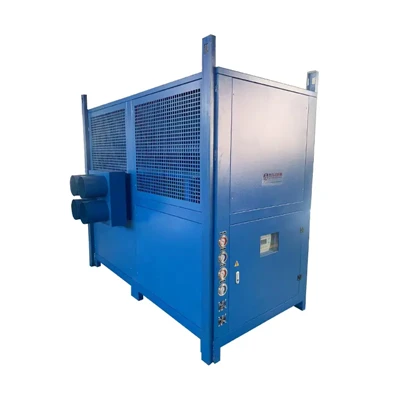
Screw Chillers If you are in need of industrial cooling equipment and want to ensure that you get the right cooling capacity for your specific needs, we are here to help. Our team of experts can assist you in accurately measuring the cooling requirements and recommending the most suitable equipment. Contact us to start a procurement discussion and find the best cooling solution for your industrial operations.
References
- ASHRAE Handbook – HVAC Systems and Equipment. American Society of Heating, Refrigerating and Air – Conditioning Engineers.
- Industrial Refrigeration Handbook. CRC Press.
Kunshan Aotianxin Machinery Co., Ltd.
We’re well-known as one of the most reliable industrial cooling equipment manufacturers in China. With abundant experience, our factory offer high quality industrial cooling equipment made in China with low price. If you have any enquiry about quotation and free sample, please feel free to email us.
Address: 550 Shengguang Road, Bacheng Town, Kunshan City, Jiangsu Province
E-mail: 1516722561@qq.com
WebSite: https://www.atxks.com/
