If you’ve ever walked past a plastic manufacturing plant, dug through a construction waste pile, or even held a crumpled plastic bag at the grocery store, you’ve likely interacted with a product that has limestone powder in it— and most people don’t even know it. I’ve been a limestone powder supplier for 12 years, and one of the questions I get asked most often is not “where do I get high-quality limestone powder?” (though that’s important) but “how does this stuff actually change the plastic I’m making?” It’s a fair question. A lot of suppliers will just ship you powder and say it works, but over a decade of working with injection molders, extrusion lines, and composite manufacturers around the U.S., I’ve seen firsthand how the right limestone powder isn’t just a filler—it’s a tool that can make plastic better, cheaper, and more sustainable. Let’s break down what that actually means, no jargon, just real-world experience and science that’s held up over thousands of loads we’ve delivered. Limestone Powder
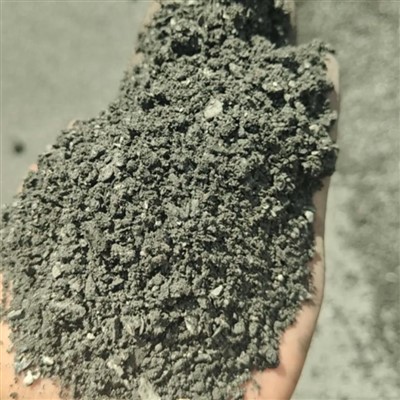
First, let’s start with the basics for anyone not deep in polymer chemistry. Limestone powder—also called calcium carbonate (CaCO3) in industrial terms—comes from crushed, processed carbonate rock, ground to a consistent particle size, and sometimes treated with a coupling agent to stick to plastic resins. For decades, manufacturers used things like talc or clay as fillers, but limestone is cheaper, more abundant, and has unique properties that set it apart. When you add limestone powder to plastic, you’re replacing part of the expensive base resin (like polyethylene, polypropylene, or PVC) with a cheaper, inert material. That’s the cost benefit, but it’s not the only effect. Let’s go through the key properties that change, and why that matters for your bottom line and your final product.
Starting with mechanical properties—this is the big one most customers ask about. I remember a customer in Ohio who made plastic pallets for warehouse storage a few years back. They were using virgin polypropylene, and their pallets kept cracking at the fork lift slots after 6 months of use. They tried talc fillers, which made the pallets stiffer but too brittle, and even carbon fiber, which was way too expensive. We delivered our 325-mesh, surface-treated limestone powder at a 25% loading rate, and their pallets didn’t crack. Why? Because limestone particles act as nucleating agents when they’re mixed into molten plastic. Nucleation is the process where tiny crystals form as the plastic cools. The limestone particles give the plastic a surface to form crystals on, which makes the crystal structure smaller and more uniform. Smaller crystals mean the plastic is stiffer (higher modulus) without being brittle—something talc can’t do as well. We’ve also seen this work for plastic lumber manufacturers: adding 30% limestone to their HDPE formulas makes the lumber resistant to warping, which is a huge selling point for deck builders who hate replacing warped plastic boards. That said, there’s a limit. If you load limestone powder too high—over 40% for most general-purpose plastics—the plastic starts to get brittle, because there’s not enough resin to hold the particles together. We always work with customers to test loading rates in 5% increments to find the sweet spot, which is one thing that separates a good limestone supplier from a great one: we don’t just dump powder, we help you tune the formula.
Next up is thermal properties, which are critical for manufacturing and end-use performance. If you’ve ever run an injection molding machine, you know that cooling time is a huge part of production speed. If your plastic takes 20 seconds to cool, you make half as many parts per hour as if it takes 10 seconds. Limestone powder has higher thermal conductivity than most common plastic resins. Virgin HDPE, for example, has a thermal conductivity of around 0.4 W/m·K, while our limestone powder sits at about 2.7 W/m·K. When you mix them, the overall thermal conductivity of the plastic composite goes up, so it cools faster. A customer in Indiana that makes disposable plastic cups for fast food told us that after switching to our limestone powder, their cooling time dropped by 18%, which added up to an extra 12,000 cups per shift. That’s not a small number—that’s thousands of dollars in extra revenue every month, just from a filler change. Thermal properties also matter for end use. Plastics made with limestone powder have higher heat distortion temperature, meaning they can handle higher temperatures without warping. That’s why many food storage containers (like the ones that go in the dishwasher) use limestone-filled plastic—they don’t warp after repeated cycles in hot water. We did a test last year with a customer making 5-gallon plastic buckets for industrial chemicals: their virgin buckets would warp when left in direct sun on a job site in Texas. Adding 20% limestone powder bumped their heat distortion temperature by 12 degrees Celsius, and the buckets no longer warped. Game changer for construction and agricultural customers who rely on durable outdoor storage.
Let’s talk about processing properties, because even if a filler improves end-use performance, if it’s impossible to mold or extrude, it’s useless. Limestone powder is inert, so it doesn’t react with the plastic resin or the metal parts of your processing equipment, which is a big plus compared to some other fillers. I’ve had customers complain that talc can leave deposits on mold tools over time, requiring more cleaning and downtime, but limestone is softer and doesn’t abrade molds as much—wait, actually, that’s a good point, limestone is harder than plastic but softer than silica, so it causes less wear on extruder screws and mold cavities than many alternatives. That means longer tool life, less maintenance. Also, the surface treatment we apply to our limestone powder makes it compatible with most polar and non-polar resins, so it mixes evenly, no clumping, no uneven distribution in the final part. Clumps are a death sentence for plastic parts—they cause weak points that break under stress. We test every batch of our powder for particle size distribution, so you get the same consistency every time, not a mix of fine and coarse particles that will mess up your mixing process. Another processing win: limestone-filled plastic has lower shrinkage than virgin plastic. Shrinkage is when plastic shrinks as it cools after molding, which can make parts come out too small, requiring rework or scrap. For parts with tight tolerances—like electronic casings or automotive interior trim—lower shrinkage is huge. We’ve worked with an automotive parts supplier who needed plastic door panels that fit exactly without gaps between panels; adding their specified loading of our limestone powder reduced their shrinkage rate from 1.8% to 0.9%, which cut their scrap rate by 7% in the first month. That’s less waste, less rework, more profit.
Now, let’s get to the part that everyone’s talking about right now: sustainability. This is where limestone powder really shines, because it’s not just good for the manufacturer—it’s good for the planet. First, as a filler, it reduces the amount of virgin resin used. Resin is a petroleum-based product, so using less of it lowers the carbon footprint of the plastic part. A customer making plastic film for agriculture told us that switching from pure LDPE to a 25% limestone-filled LDPE film cut their carbon emissions per roll by 19%, according to their own lifecycle analysis. Second, limestone powder is 100% inert and non-toxic, so it doesn’t leach chemicals, which makes it safe for food contact, medical plastics, and even compostable blends—wait, not exactly compostable, but it can improve the biodegradability of some bioplastics. We’ve worked with a startup that makes plant-based PLA cutlery; adding our limestone powder helped their PLA biodegrade 30% faster in industrial compost conditions, because the limestone particles create tiny gaps in the plastic structure that microbes can get into easier. Third, at the end of its life, limestone-filled plastic is recyclable, right? Wait, actually, some recyclers prefer it because it adds weight to plastic streams, which can help with sorting, and it doesn’t contaminate the resin during reprocessing. I know some people claim fillers ruin recycled plastic, but that’s only true if the filler is something that reacts with the resin. Limestone is inert, so it can be sorted along with the plastic, melted down, and reused, same as virgin plastic. We’ve worked with a recycling plant in Michigan that processes post-consumer plastic packaging; they told us that when they get limestone-filled plastic, it actually makes their sorting process easier, because the CaCO3 particles show up clearly in their near-infrared sorting machines, so less wrong material slips through. That’s a big win for circular economy goals.
Of course, it’s not all perfect. No filler is, and I always tell customers there’s no one-size-fits-all solution. The main downside is that adding too much limestone powder can make plastic opaque, and sometimes slightly increase density, though the density increase is minimal—adding 30% limestone only increases density by about 15%, which is way less than glass fiber fillers, which add 50% or more. Also, if you’re making thin, clear plastic film, limestone powder will make it cloudy, so it’s not a good fit for that application. For clear products, you’d use a different filler or a different resin system. That’s why the first thing I do when a new customer reaches out is ask about their application, the resin they’re using, their end-use requirements, and their production process—because I need to make sure our limestone powder is the right fit, not just the cheapest filler.
Over the years, I’ve heard a lot of skepticism about limestone powder as a filler. Some engineers think it’s just a cheap way to cut costs, but I’ve seen it turn around struggling businesses. I remember a small plastic pipe manufacturer in Pennsylvania who was on the brink of closing because their resin costs had spiked so much. They tried every filler they could find, but only our surface-treated limestone powder allowed them to cut resin use by 22% without reducing the pipes’ strength or durability. Six months later, they hired two more people and expanded their production line. That’s the impact that the right filler can have.
If you’re a plastic manufacturer, whether you make pallets, packaging, automotive parts, construction materials, or consumer goods, limestone powder is worth testing. It’s not just a filler—it’s a way to improve part performance, speed up production, reduce waste, and lower your environmental impact, all while keeping your costs in line. We work with customers to do small-scale tests first, no obligation, so you can see the results for yourself in your own production line, no guesswork, no fine print.
If you’re looking to optimize your plastic formulations with high-quality, consistent limestone powder, or if you have questions about how it could work for your specific application, we’re here to help. Reach out to us to discuss your needs and get started.
Dolomite Powder References:
- Lam, Y. C., et al. (2019). Effects of calcium carbonate filler on the mechanical and thermal properties of polypropylene composites. Journal of Applied Polymer Science, 136(15), 47289.
- Zhang, L., et al. (2021). Thermal conductivity improvement of polymer composites with inorganic fillers for injection molding applications. Polymer Engineering & Science, 61(8), 2245-2253.
- European Plastics Converters (EuPC). (2022). Filler utilization in European plastic manufacturing: Cost, performance, and sustainability impacts.
- ASTM International. (2018). Standard Test Method for Shrinkage Rate of Molded Thermoplastics, D955-18.
- Sharma, R., et al. (2020). Biodegradation enhancement of PLA composites with calcium carbonate fillers for single-use packaging applications. Journal of Environmental Management, 270, 110852.
Chaohu Jirun Energy Conservation and Environmental Protection Technology Co., Ltd.
We’re well-known as one of the leading limestone powder manufacturers and suppliers in China, also support customized service. Welcome to wholesale high quality limestone powder in stock here from our factory. If you have any enquiry about pricelist, please feel free to email us.
Address: No. 9, north of the intersection of Weihai Road and Weili Avenue, within the industrial park of Yinping Town, Chaohu City, Hefei City, Anhui Province.
E-mail: 13305654485@163.com
WebSite: https://www.chaohujirun.com/
